In the high-performance landscape of 2026, we are moving past the era of just "getting big" or "getting lean." The new gold standard of fitness is longevity and functional mastery. At the heart of this movement lies a physical attribute often ignored until it’s gone: balance. Whether you are an elite athlete looking to shave seconds off a sprint or a proactive individual aiming to stay agile into your 80s, stability is the invisible glue that holds your movement together.
Statistics from the latest clinical reviews are staggering: implementing a comprehensive stability program can reduce injury-causing falls by 37%, serious injuries by 43%, and bone fractures by a massive 61%. To master your movement today, you must focus on three pillars: strengthening the deep core for foundational stability, practicing single-leg drills to challenge your proprioception, and engaging in mindful movements that sync the brain with the body.

Why Balance is Your Most Critical Asset in 2026
We often treat balance as a binary state—you either have it or you don't. In reality, balance is a highly trainable skill that relies on the synergy of three complex systems: your vision (tracking your surroundings), your vestibular system (the inner ear's "leveler"), and proprioception (your body’s ability to sense its position in space).
As we navigate an increasingly digital and sedentary world, our "proprioceptive maps" begin to blur. We lose the micro-adjustments in our ankles and the reactive firing in our core. This isn't just about preventing falls in old age; it’s about maximizing power output in the gym and efficiency in daily life. If your body doesn't feel stable, your nervous system will literally "brake" your strength to protect you from injury. By training stability, you are essentially "unlocking" the full potential of your musculature.
Expert Tip from a DPT (Doctor of Physical Therapy): "Stability isn't just about standing still. It's about 'dynamic control'—the ability to maintain your center of mass over a changing base of support. Think of it as the difference between a parked car and a high-performance vehicle taking a sharp turn."
The Science of Stability: How Your Body Stays Upright
To improve balance, we have to look beyond the muscles. We are training the nervous system. This is where "Movement Snacks" come into play. These are short, 2-to-5-minute bursts of stability work integrated into your day—standing on one leg while brushing your teeth or doing heel-to-toe walks down the hallway.
These "snacks" keep the neural pathways between your brain and your joints "greased." When you challenge your balance, you are forcing your brain to process sensory information faster. You are sharpening your proprioception—the "sixth sense" that tells you where your foot is without you having to look at it.
The "Stability Stacking" Method: A Modern Training Framework
In my years of editing training programs, I’ve found that the most effective way to build balance is through Stability Stacking. We don’t just jump onto a Bosu ball and hope for the best. We layer challenges systematically:
- Base Layer: Static balance on a stable surface (Double leg -> Single leg).
- Sensory Layer: Altering visual or vestibular input (Closing eyes -> Turning the head).
- Dynamic Layer: Adding movement or external resistance (Swinging a weight -> Stepping).
- Cognitive Layer: Adding a mental task (Counting backward -> Catching a ball).
By using the SMART framework—Specific, Measurable, Attainable, Relevant, and Time-bound—you can track your progress. Can you hold a single-leg stance for 30 seconds today? By next month, can you do it with your eyes closed?
9 Essential Exercises for Superior Stability
1. Heel-to-Toe Walk (The Tightrope)
This is the fundamental drill for narrowing your base of support. By placing one foot directly in front of the other, you force the smaller stabilizer muscles in your ankles and hips to take over.
- Why: It narrows the base of support to challenge ankle micro-adjustments and linear stability.
- How: Stand tall, looking straight ahead. Place the heel of one foot directly against the toes of the other. Take 10–20 steps forward, then try to reverse it.
2. Single-Leg Deadlifts
This is my favorite "functional" balance move. It combines hamstring strength with intense proprioceptive demand.
- Why: It forces you to master proprioception while hinging, engaging the entire posterior chain and core.
- How: Stand on one leg with a "soft" (slightly bent) knee. Hinge at the hips, sending your non-standing leg straight back while keeping your spine neutral. Reach toward the floor, then return to standing using your glutes.
3. Bulgarian Split Squats
If you want to eliminate side-to-side imbalances, this is the gold standard.
- Why: It builds unilateral strength and forces the "lead" leg to stabilize the entire torso, preventing dangerous lateral shifts.
- How: Place one foot on a bench behind you. Lower your hips until your front thigh is parallel to the floor. Keep your chest up and your core braced.
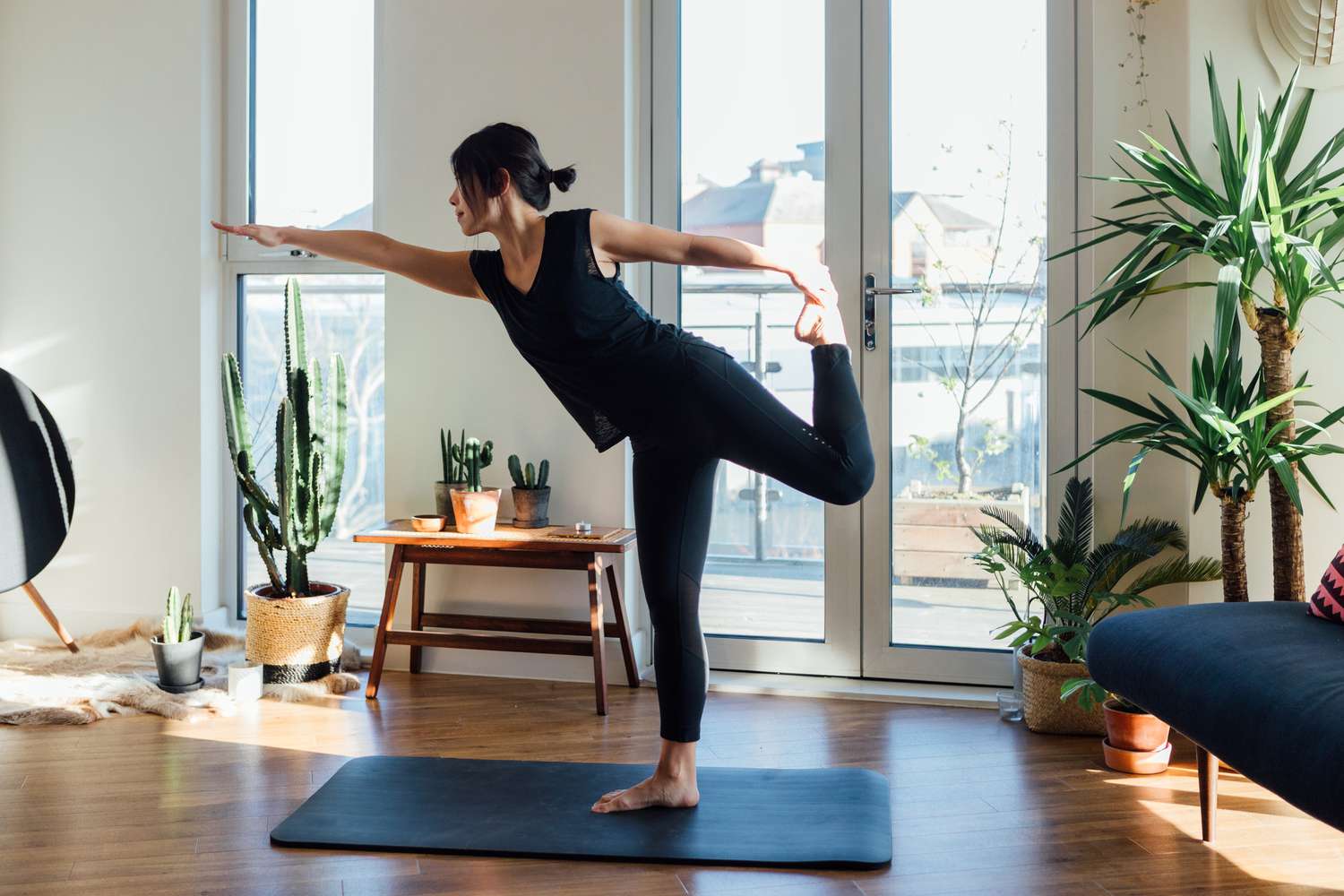
4. The Tree Pose (Yoga Integration)
Yoga isn't just for flexibility; it’s a masterclass in isometric stability. The Tree Pose focuses on the "rooting" of the foot and the engagement of the deep core.
- Why: It’s a static hold that recalibrates the mind-body connection and strengthens the arch of the foot.
- How: Stand on one leg. Place the sole of your opposite foot on your inner calf or thigh (avoid the knee). Bring your hands to your heart or reach them overhead. Hold for 30–60 seconds.
5. Reactive Stepping
Real-world falls happen because we can't react fast enough. This drill trains your "fast-twitch" recovery.
- Why: It improves response time to sudden trips or uneven surfaces. Research shows that practicing Tai Chi—which utilizes similar slow, controlled weight-shifting and reactive movements—can reduce fall risk in older adults by up to 50%.
- How: Stand in an athletic stance. Have a partner call out "Forward," "Left," "Right," or "Back." Step explosively in that direction and immediately return to the center, stabilizing yourself instantly.
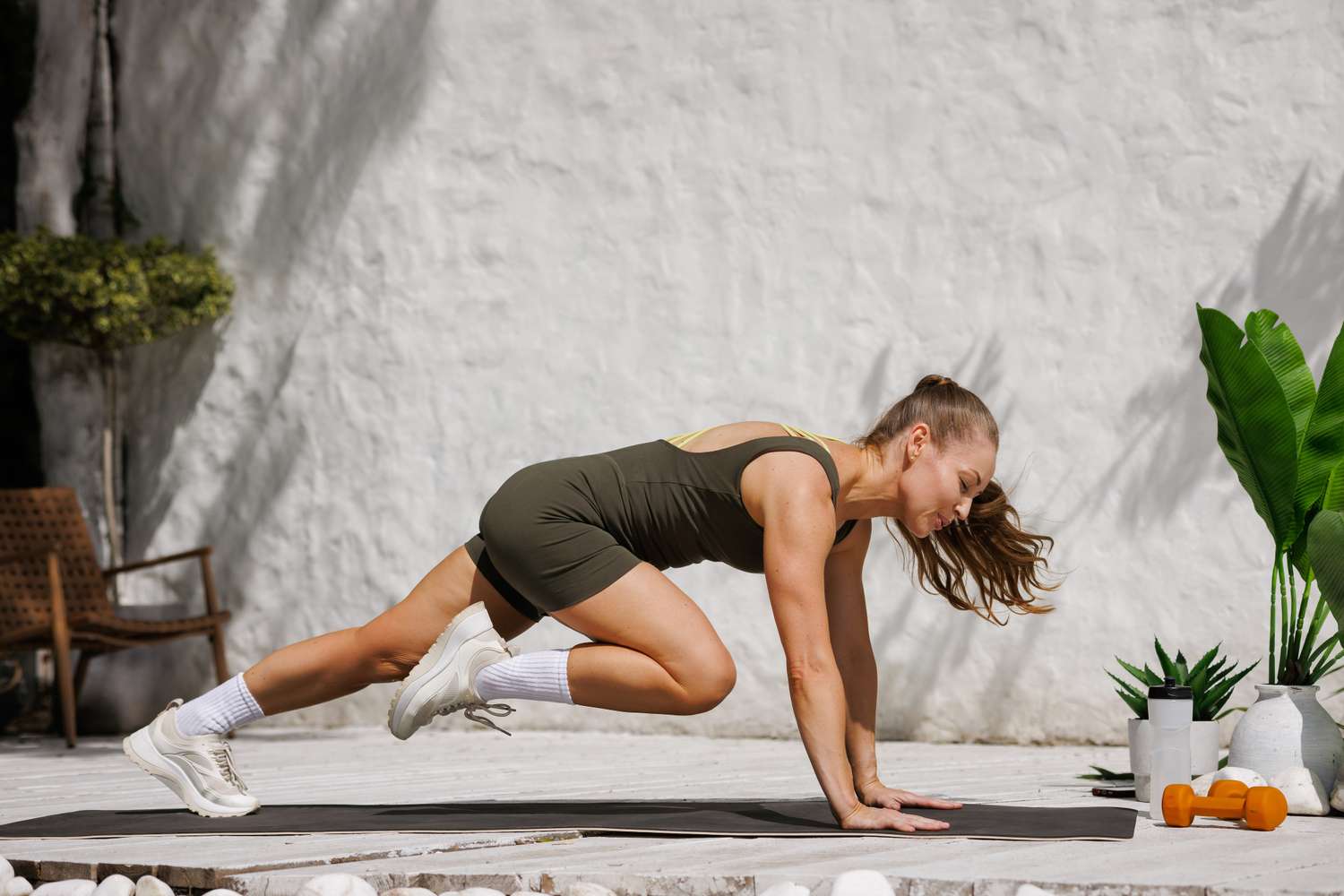
6. Plank Variations (The 3-Point Plank)
Stability starts at the center. If your core is weak, your limbs have no "anchor" to pull from.
- Why: Core stability is the foundation. Lifting one limb during a plank forces the core to resist rotation (anti-rotation).
- How: Start in a standard plank. Lift one arm or one leg off the ground without letting your hips tilt or sag. Hold for 5–10 seconds and switch.
7. Dual-Task Tandem Walk
In 2026, we are learning that the brain is a major factor in balance. Most falls happen when we are distracted—talking on a phone or looking for a street sign.
- Why: It trains the brain to maintain balance while processing cognitive data, mimicking real-world distractions.
- How: Perform the Heel-to-Toe walk while counting backward from 100 by 7s. If you stumble, reset and focus.
Expert Tip from a Certified Strength & Conditioning Specialist (CSCS): "Balance is a 'use it or lose it' skill. If you find yourself holding onto the walls or furniture while moving through your house, your system is already de-training. Re-engage your nervous system with daily 2-minute drills."
8. Lateral Stability Side Steps
Sideways falls are the leading cause of hip fractures. We must strengthen the "side" of the hip.
- Why: It strengthens the gluteus medius, which is responsible for keeping your pelvis level during movement.
- How: Place a resistance band around your ankles. Get into a quarter-squat and take 15 controlled steps to the right, then 15 to the left. Keep your toes pointed forward throughout.
9. Multi-Directional Weight Shifts
Life doesn't happen in a straight line. This exercise simulates the 360-degree demands of navigating a crowded city or a hiking trail.
- Why: It simulates real-world navigation and builds 360-degree awareness.
- How: Stand with feet shoulder-width apart. Shift your weight as far as possible to the front, back, left, and right without lifting your feet or losing your posture. Imagine you are a "weighted buoy" in the ocean.
Maximizing Results: The Lifestyle Multipliers
Training alone isn't enough. To truly master your movement in 2026, you need to optimize the environment in which your body operates.
- The Right Footwear: Your feet are your primary sensors. Avoid "pillowy" shoes that dampen sensory feedback. Look for footwear with a wide toe box (to allow for natural toe splay) and arch support that allows the foot to function as a stable tripod.
- Nutrition & Muscle Mass: You cannot stabilize a body that lacks muscle. Aim for 0.8g to 1.2g of protein per kilogram of body weight to combat sarcopenia (age-related muscle loss). Muscle is the "armor" that protects your bones if a fall does occur.
- Vision & Vestibular Health: Since balance relies on sight, get your eyes checked annually. Furthermore, stay hydrated; the fluid in your inner ear (vestibular system) is sensitive to dehydration, which can lead to vertigo or dizziness.
- Hydration & Blood Pressure: Sudden drops in blood pressure when standing (orthostatic hypotension) are a major cause of balance loss. Maintain consistent electrolyte levels to keep your system stable.
FAQ
Q: How often should I perform these exercises to see results? A: Consistency beats intensity. Aim for "Movement Snacks" every day. For the dedicated exercises like Single-Leg Deadlifts or Bulgarian Split Squats, 2–3 times a week as part of your regular workout is ideal. Most people notice a significant improvement in their "steadiness" within 4–6 weeks.
Q: I’m a beginner and feel very shaky. Is this safe? A: Absolutely, but start with "Supportive Progressions." Perform the exercises near a sturdy chair or a wall that you can lightly touch for balance. As your confidence grows, move from a full hand-hold to a single finger-touch, and eventually to no support.
Q: Can balance training really help my lifting performance? A: Yes. Your brain has a "safety governor." If it senses instability in your joints, it will inhibit muscle recruitment to prevent a tear or break. By improving your stability, you signal to your brain that it’s safe to exert maximum force.
Take Action Today
Mastering your movement is a lifelong journey, but it starts with a single step—or in this case, a single-leg stand. Don't wait for a trip or a stumble to realize your stability has declined. Start integrating the Stability Stacking method into your routine today.
Pick two exercises from the list above—perhaps the Heel-to-Toe Walk and the Tree Pose—and commit to doing them for just 5 minutes tomorrow morning. Your future self will thank you for the agility, the strength, and the freedom of movement you’ve preserved.