It’s 6:00 PM on a Tuesday. You’ve just finished a long day of meetings, and the most daunting question in your life is "What’s for dinner?" You open the fridge, stare at a wilted head of lettuce and a jar of mustard, and eventually reach for your phone to order takeout. We’ve all been there—it’s called the "Refrigerator Stare" syndrome, and it is the primary enemy of both your metabolic health and your bank account.
As a nutrition editor, I look at the data: implementing a structured 15-item meal prep checklist reduces weekly grocery waste by 30% and saves the average household approximately $1,200 annually. But beyond the savings, there is a psychological win. Data indicates that 92% of individuals who adopt "hybrid meal prep" strategies—mixing homemade staples with strategic, high-quality shortcuts—report higher long-term dietary consistency compared to those attempting 100% homemade preparation from scratch every single day.
To ensure nutrient density and flavor variety without spending your entire weekend in the kitchen, a healthy meal prep checklist should include versatile proteins like chicken thighs and ground turkey, complex grains like quinoa, and fresh produce such as cucumbers and lemons. This isn't just about "cooking ahead"; it’s about building a modular pantry that works for you.
Part 1: The Logistics of a Successful Prep Session
Before we touch an onion or a chicken breast, we have to talk about the infrastructure. You wouldn't build a house without a level, and you shouldn't meal prep without the right tools. The goal of the "2026 Meal Prep Guide" is efficiency.
The Essential Tool Kit
- A High-Quality Chef’s Knife: Most home cooks struggle because they are "sawing" through vegetables with dull blades. A sharp 8-inch knife reduces prep time by half.
- Dual Cutting Boards: Use one exclusively for proteins and one for produce to prevent cross-contamination.
- The Container Strategy: You need 15–20 high-quality containers. I recommend glass over BPA-free plastic. Studies suggest that food stored in airtight glass containers maintains freshness 37% longer than in plastic, and you avoid the risk of chemical leaching during reheating.
- Two Sheet Pans: These are the workhorses of the "Parallel Cooking" strategy—where you roast your vegetables in the oven while your grains simmer on the stovetop.
Pro-Tip: The 2-Hour Sunday Rule Block out exactly 120 minutes on Sunday afternoon. This isn't for cooking 21 individual meals; it’s for prepping your "building blocks." If you have your protein cooked, your grains boiled, and your veggies chopped, a "homemade" meal takes only five minutes to assemble.
Part 2: The Core 15-Item Healthy Staple Checklist
This list is designed for maximum versatility. These items are the "Lego bricks" of nutrition—you can snap them together in dozens of different ways to create entirely different cuisines.
The Foundation: High-Yield Proteins
Protein is the most satiating macronutrient, and getting it right is the difference between a meal that lasts two hours and one that lasts five.
- 1. Chicken Thighs (Boneless/Skinless): While many reach for breasts, thighs have higher moisture retention. They stay juicy for up to 5 days in the fridge, whereas breast meat can become "woody" and dry by Wednesday.
- 2. Ground Turkey (93% Lean): This is the ultimate "chameleon" protein. You can turn it into taco meat, Mediterranean meatballs, or a quick stir-fry. It’s leaner than beef but more flavorful than ground chicken.
- 3. Hard-Boiled Eggs: At approximately $0.03 per gram of high-quality protein, these are the champions of budget nutrition. Boil a dozen at once for a grab-and-go snack or a salad topper.
| Protein Source | Avg. Cost per lb | Protein Content (per 4oz) | Best Prep Method |
|---|---|---|---|
| Chicken Thighs | $3.50 - $5.00 | 22g | Roasted at 425°F |
| Ground Turkey | $4.00 - $6.00 | 21g | Sautéed with aromatics |
| Chickpeas (Canned) | $1.00 - $1.50 | 7g | Rinsed and air-fried |
The Chef’s Secret for Chicken: For the best meal-prepped chicken, marinate your meat in a mixture of Greek yogurt and lemon juice for at least two hours. The lactic acid in the yogurt breaks down the fibers, making it incredibly tender. Always cook chicken to an internal temperature of 165°F and—this is crucial—let it rest for five minutes before slicing to keep the juices inside the meat.
The Fuel: Complex Carbs & Grains
Avoid refined "white" carbs that spike your insulin. Instead, focus on fiber-dense options that actually improve in texture after a day or two in the fridge.
- 4. Quinoa: This is technically a seed, meaning it’s a complete protein. It actually "sets" better after being chilled, making it the perfect base for cold grain bowls.
- 5. Sweet Potatoes: These are the gold standard for texture. Roast them in cubes; they retain their structure for 7 days without becoming mushy.
- 6. Farro or Brown Rice: If you want a "nutty" bite, farro is superior for meal prep because it doesn't get sticky or gummy when reheated.
The Volume: Hardy Vegetables
The biggest mistake people make is prepping "soft" vegetables like zucchini or spinach too early. They turn to slime by Tuesday. Instead, choose "hardy" options.
- 7. Broccoli: The king of roasting. The florets catch sauces and seasonings perfectly.
- 8. Bell Peppers: These provide a much-needed crunch. Slice half for raw snacking and roast the other half for sweetness in your bowls.
- 9. Cabbage or Brussels Sprouts: These are the budget-friendly longevity staples of the vegetable world. A head of cabbage can stay fresh in your fridge for three weeks and provides incredible fiber.
- 10. Kale or Hearty Spinach: If using greens, store them with a dry paper towel in the container to absorb moisture and prevent wilting.
The Flavor & Prep Essentials
- 11. Lemons: Use the zest for cooking and the juice for brightening up a dish right before eating. Acidity is the "missing ingredient" in most bland homemade meals.
- 12. Plain Greek Yogurt: Use it as a marinade, a high-protein substitute for sour cream, or the base of a creamy dressing.
- 13. Cucumbers: These provide the "freshness" element. Don't cook them; slice them fresh to add a cooling contrast to roasted meats.
- 14. The Aromatic Base (Garlic/Onion/Olive Oil): Never underestimate the power of sautéing your grains in a little garlic and olive oil before boiling them.
- 15. Canned Chickpeas or Lentils: Your "emergency" protein. If you run out of chicken by Thursday, a can of chickpeas tossed with lemon and herbs is a 2-minute lifesaver.
Part 3: The 2026 Meal Prep Formulas
I don't want you to follow a rigid recipe. I want you to follow a formula. To prevent meal prep boredom, I recommend the "3-3-2 Rule": Rotate three different proteins weekly, vary your seasoning profiles to create different cuisines from one base ingredient, and allow for two 'free' meals per week where you eat out or try something entirely new.
The Grain Bowl Formula:
- Base: 1/2 cup Quinoa or Farro
- Protein: 4-5 oz Chicken or Turkey
- Hardy Veg: 1 cup Roasted Broccoli or Cabbage
- Fresh Element: Sliced Cucumbers or Lemon Zest
- The Sauce: A dollop of Greek yogurt mixed with hot sauce or herbs.
The 'One Pan' Sheet Pan Strategy: This is the ultimate time-saver. You can roast your proteins and your hardy vegetables on the same tray. Just ensure you cut the vegetables into sizes that match the cooking time of the meat.
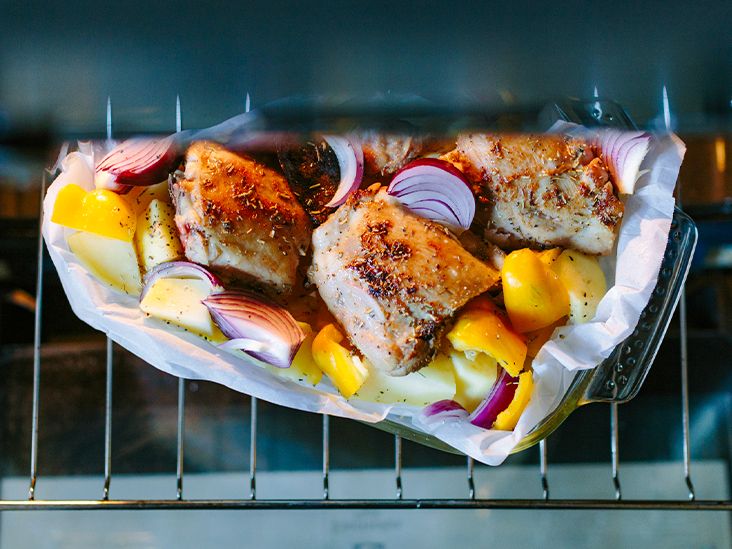
By roasting everything together, you allow the juices from the chicken to season the vegetables, creating a cohesive flavor profile with minimal cleanup.
Part 4: Storage, Food Safety & Reheating
Many people fail at meal prep because they don't understand the science of storage. Nutrient density begins to degrade the moment food is cooked and exposed to air.
The USDA Refrigerator Rule Most cooked items—especially poultry and ground meats—should be consumed within 3-4 days when stored at 40°F (4°C) or below. If you prep on Sunday, plan to eat your last "fresh" meal by Thursday.
The Freezing Guide If you want to prep for the entire month:
- Soups and Stews: These are perfect for freezing and can last up to 6 months.
- Grains: Cooked quinoa and rice freeze exceptionally well. Spread them flat on a baking sheet to freeze before bagging them to prevent a giant "grain brick."
- Avoid Freezing: High-water content veggies like cucumbers or raw peppers, as their cell walls will collapse, leaving them mushy.
The Reheating Secret When reheating in a microwave, add a teaspoon of water to the container and cover it loosely. This creates a "steam chamber" that prevents your chicken and grains from drying out.
FAQ: Common Meal Prep Hurdles
Q: How do I prevent my reheated chicken from tasting like "leftovers"? A: This is often caused by lipid oxidation. To prevent it, ensure your chicken is completely cooled before sealing the lid. Also, using the Greek yogurt marinade mentioned earlier acts as a protective barrier. Finally, don't overcook it the first time; aim for exactly 165°F.
Q: Is buying organic essential for every item on the checklist? A: Not necessarily. If you’re on a budget, prioritize organic for the "Dirty Dozen" (like bell peppers and kale). For items with thick skins like onions, sweet potatoes, and lemons, conventional is generally fine. Focus more on the consistency of eating whole foods than on the organic label.
Q: How do I scale this checklist for a family of four? A: Simply double the proteins and grains. The "One Pan" strategy becomes "Two Pan." Instead of individual containers, use large glass pyrex dishes to store "family style" components, then assemble them fresh at the dinner table in under 10 minutes.
Your Action Plan for Week 1
Don't try to change your entire life overnight. That is the fastest way to burnout. Instead, follow this step-by-step plan:
- Start Small: Choose just one meal type to prep this week—lunches are usually the best ROI.
- The Shop: Go to the store with the 15-item list above. Don't buy anything else.
- The Window: Block 2 hours this Sunday. Put on a podcast or your favorite playlist.
- Execute: Roast the chicken and veggies, boil the quinoa, and portion them out.
You are not just "making food"; you are reclaiming your time and your health. If you’re looking for more specific meal plans and advanced nutritional strategies, I invite you to join our community for more evidence-based guides.