If you are scanning the grocery aisle looking for the ultimate nutritional powerhouse, you likely find yourself caught between two of nature's most iconic tree nuts: the walnut and the pecan. They look remarkably similar—both possess a crinkly, brain-like appearance and a rich, earthy flavor profile—but from a metabolic standpoint, they serve very different purposes.
The Verdict: Which Nut Should You Choose?
If you are looking for a quick answer before we dive into the science, here is the bottom line:
- For Brain Health and Omega-3s: Walnuts are the undisputed champions. They contain significantly more alpha-linolenic acid (ALA) than almost any other food in the plant kingdom.
- For Skin Health and Antioxidants: Pecans take the lead. They boast a higher antioxidant capacity and a fat profile that mimics the heart-healthy benefits of olive oil.
- For Weight Management: It is a tie. Both nuts provide high satiety through a combination of healthy fats, fiber, and protein, though their specific nutrient ratios differ slightly.
TL;DR: The Quick Comparison
For those who want the data at a glance, here is how a standard 1-ounce (28-gram) serving of raw walnuts compares to raw pecans.
| Nutrient | Walnuts (1 oz / 28g) | Pecans (1 oz / 28g) |
|---|---|---|
| Calories | 185 kcal | 196 kcal |
| Omega-3 (ALA) | 2.5g | 0.17g |
| Total Fat | 18.5g | 20.4g |
| Monounsaturated Fat | 2.5g | 11.6g |
| Protein | 4.3g | 2.6g |
| Fiber | 1.9g | 2.7g |
| Antioxidant Capacity | High | Very High (Top 15 Food Sources) |
Nutritional Showdown: By the Numbers
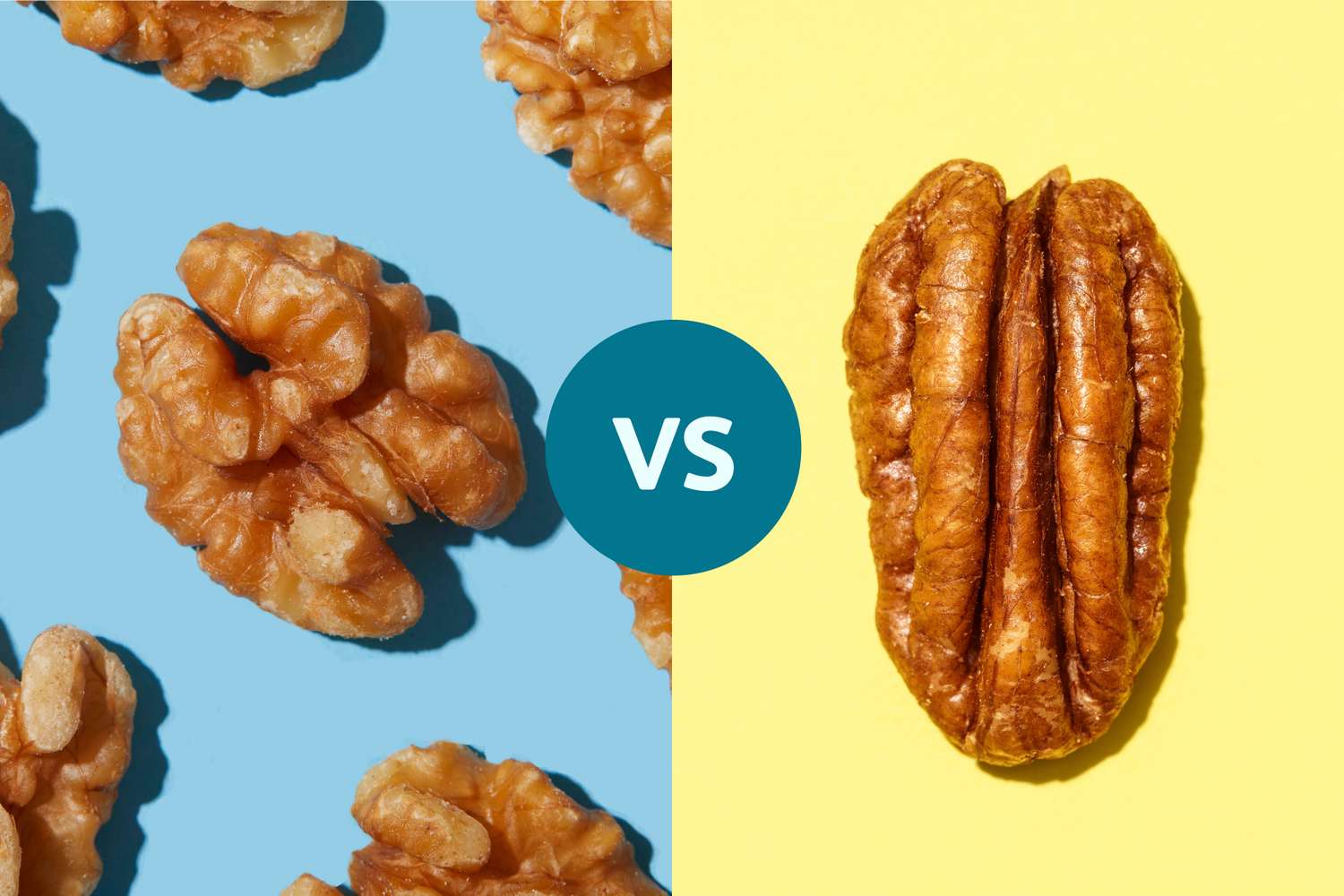
When we look at walnut vs pecan nutrition facts, the most striking difference lies in their fatty acid composition. Not all fats are created equal, and these two nuts represent the two major categories of healthy fats.
The Fat Profile
Walnuts are defined by their high concentration of polyunsaturated fats, specifically Alpha-linolenic acid (ALA). In a single one-ounce serving (about 14 halves), you get approximately 2.5 grams of ALA. To put that in perspective, that is over 150% of the recommended daily intake for most adults.
Pecans, on the other hand, are the "olive oil" of the nut world. They are rich in monounsaturated fats, primarily oleic acid. This is the same heart-healthy fat found in avocados and extra virgin olive oil. While pecans are higher in total fat and calories, their fat structure is incredibly stable and excellent for long-term heart health and reducing systemic inflammation.
Protein and Fiber
If you are using nuts as a plant-based protein boost, walnuts have a slight edge, offering 4.3 grams per ounce compared to the pecan's 2.6 grams. However, pecans win the fiber battle. With 2.7 grams of fiber per serving, pecans are better at promoting digestive regularity and feeding the beneficial bacteria in your gut microbiome.
The Omega-3 Deep Dive: Why Walnuts Win the Brain Battle
The primary reason walnuts are often called "brain food" isn't just because they look like a brain; it's because of their chemical makeup. When we talk about plant-based ALA sources, walnuts are virtually in a league of their own.
The Power of ALA
Alpha-linolenic acid (ALA) is the essential plant-based form of Omega-3. Since your body cannot produce it, you must consume it through your diet. Once ingested, a portion of ALA is converted into EPA and DHA—the fatty acids typically found in fish oil that are vital for neuroprotection.
Research suggests that the unique combination of Omega-3 fats, polyphenols, and Vitamin E in walnuts helps:
- Reduce Oxidative Stress: They protect brain cells from damage caused by free radicals.
- Improve Neurogenesis: They support the birth of new neurons, which is critical for memory and learning.
- Enhance Signaling: They help maintain the fluidity of cell membranes, allowing for better communication between brain cells.
For anyone following a vegan or vegetarian diet, walnuts are not just a snack; they are a nutritional necessity for maintaining cognitive function as you age.
The Pecan Advantage: Antioxidants and Heart-Healthy Fats
While walnuts dominate the Omega-3 category, pecans hold their own in the realm of cellular protection. According to USDA data, pecans rank in the top 15 food sources for antioxidant capacity. They are particularly rich in proanthocyanidins, a class of flavonoids that have been linked to improved cardiovascular health and reduced risk of chronic disease.
The "Olive Oil" of Nuts
Pecans contain more monounsaturated fat than almost any other nut. This makes them incredibly effective at lowering LDL (the "bad" cholesterol) while maintaining or increasing HDL (the "good" cholesterol). If you struggle with cholesterol management, incorporating a handful of pecans into your daily routine can have a measurable impact on your lipid profile.
Skin and Beauty Benefits
Beyond heart health, pecans are a secret weapon for skin vitality. They are a significant source of Vitamin E, zinc, and ellagic acid. These nutrients work together to:
- Combat UV Damage: Helping your skin recover from sun exposure.
- Promote Collagen Production: Zinc is a co-factor in the synthesis of collagen, which keeps skin firm and elastic.
- Reduce Redness: The anti-inflammatory properties of pecans can help soothe inflammatory skin conditions like acne or eczema.
Goal-Oriented Choice: Which Should You Pick?
In my work as a nutrition editor, I always tell readers that the "best" food depends entirely on your personal health goals. Here is how to decide which nut should earn a permanent spot in your pantry.
1. Best for Heart Health: The Verdict is a Tie
Both nuts are exceptional for the heart, but for different reasons. Choose walnuts if you need to lower systemic inflammation (measured by C-reactive protein). Choose pecans if you specifically need to improve your LDL-to-HDL cholesterol ratio.
2. Best for Brain Health: Walnuts
If you are a student, a high-performing professional, or someone looking to prevent cognitive decline, walnuts are the clear choice. Their high ALA content makes them the best nuts for brain health by a wide margin.
3. Best for Weight Management: Pecans
While walnuts have more protein, the higher fiber and monounsaturated fat content in pecans often lead to greater satiety. A small handful of pecans can keep you feeling full for longer, making them an excellent tool for appetite control.
4. Best for Metabolic Health: Walnuts
Walnuts have been shown in multiple clinical trials to improve endothelial function—the health of your blood vessel linings. This is a key factor in preventing Type 2 diabetes and hypertension.
Practical Guide: How to Eat for Maximum Benefit
Nutrients are only as good as your ability to absorb them. To get the most out of your walnuts and pecans, follow these editor-vetted tips.
The 1-Ounce Rule
Portion control is vital because nuts are calorie-dense. To visualize a 1-ounce serving:
- Walnuts: About 14 halves.
- Pecans: About 19 halves.
Storage Hacks
Because walnuts are so high in polyunsaturated fats, they are highly susceptible to oxidation. If you leave walnuts in a clear jar on a sunny countertop, the fats will go rancid, creating a bitter taste and destroying the health benefits.
- The Fridge/Freezer Rule: Always store walnuts (and pecans) in an airtight container in the refrigerator if you plan to eat them within a month, or in the freezer for up to a year. This preserves the delicate Omega-3s.
Smart Pairings
To maximize nutrient absorption, try these combinations:
- Walnuts + Greek Yogurt: The protein in the yogurt and the healthy fats in the walnuts provide a slow-release energy source that prevents blood sugar spikes.
- Pecans + Dark Chocolate: The antioxidants in pecans and the flavonoids in dark chocolate (70% or higher) create a cardiovascular powerhouse snack.
- Walnuts + Berries: This "brain-boosting" duo combines Omega-3s with anthocyanins from the berries for maximum neuroprotection.
FAQs
Q: Can I replace fish oil with walnuts for my Omega-3 needs? A: While walnuts are an excellent plant-based source of ALA, the conversion rate of ALA to DHA and EPA (the forms found in fish) is relatively low (usually 5-15%). If you are purely plant-based, walnuts are essential, but you might also consider an algae-based DHA supplement to ensure full coverage.
Q: Does roasting nuts destroy the Omega-3s? A: High-heat, long-duration roasting can cause some oxidation of the delicate polyunsaturated fats in walnuts. To preserve the most nutrients, consume them raw or lightly toasted at a low temperature (under 300°F / 150°C) for no more than 10 minutes.
Q: Are pecans or walnuts better for keto diets? A: Pecans are generally preferred for strict keto diets because they are higher in fat and slightly lower in "net" carbs due to their higher fiber content. However, both fit easily into a low-carb lifestyle.
Conclusion
In the battle of pecans vs walnuts omega-3, the walnut takes the crown for its unmatched ALA content and brain-boosting potential. However, the pecan remains a formidable contender, offering superior antioxidant capacity and heart-healthy monounsaturated fats that rival olive oil.
Rather than choosing just one, the best strategy for optimal health is diversity. Use walnuts in your morning oatmeal to jumpstart your brain, and reach for a handful of pecans as a mid-afternoon snack to keep your heart healthy and your skin glowing. By rotating these two nutritional powerhouses, you ensure your body gets a full spectrum of the essential fats and antioxidants it needs to thrive.