Quick Facts
- Safety Status: Retinol is entirely safe for clear skin and is considered the "gold standard" by dermatologists for long-term health.
- Primary Benefits: Accelerates cell turnover, stimulates collagen production, and refines texture even in the absence of acne.
- The Adjustment Period: Known as "retinization," this phase typically lasts 6 to 8 weeks (42-56 days).
- 2026 Trend: A 30% increase in retinoid-infused body care is expected, targeting "strawberry skin" and skin elasticity beyond the face.
- The Golden Rule: Always pair with a high-spectrum SPF 50+, as retinol increases photosensitivity.
In the ever-evolving landscape of skincare, few ingredients have maintained the staying power of Vitamin A. We often see it marketed as a "miracle cure" for stubborn cystic acne or a "time machine" for deep-set wrinkles. This raises a pivotal question for those currently blessed with a smooth complexion: Is retinol safe for clear skin?
The short answer is a resounding yes. In fact, waiting for a "problem" to arise before starting a retinoid is like waiting for a car to break down before changing the oil. Retinol is not merely a corrective treatment; it is a biological optimizer. As we look toward 2026, the industry is shifting away from "reactive" skincare toward "cellular longevity," where the goal is to maintain the skin’s peak functional state for as long as possible. Whether you have active breakouts or a perfectly clear canvas, retinol remains the most evidence-based tool for ensuring your skin remains resilient, luminous, and structurally sound.
The Dermatologist's Verdict: Why 'Clear' Skin Still Needs Vitamin A
So many products promise miracles, but Vitamin A is among the few with the science to back it up. We asked top dermatologists to decode the most common misconception—that retinol is only for those "fixing" a skin issue. The reality is that "clear" skin is often a temporary state dictated by age and genetics, but its long-term quality depends on cellular turnover.
At its core, retinol communicates with your skin cells, telling them to behave like younger, healthier versions of themselves. This happens through specific protein receptors in the skin that, when activated by Vitamin A, accelerate the rate at which new cells are born and old, dull cells are shed. For someone with clear skin, this translates to a perpetual "lit-from-within" glow and a significant reduction in the appearance of pores and fine lines before they even become visible to the naked eye.
Furthermore, it’s essential to understand the "Retinoid Hierarchy." Not all Vitamin A is created equal. Most over-the-counter products use Retinyl Esters (gentle but slow) or Retinol (the industry standard). However, the 2026 trend is leaning heavily toward Retinaldehyde (Retinal), which requires only one conversion step to become active Retinoic Acid, offering results up to 11 times faster than traditional retinol without a proportional increase in irritation.
| Retinoid Type | Strength | Irritation Risk | Best For |
|---|---|---|---|
| Retinyl Palmitate | Low | Very Low | Ultra-sensitive skin / Beginners |
| Retinol | Moderate | Moderate | General texture & Anti-aging |
| Retinaldehyde | High | Moderate | Fast results / Advanced users |
| Tretinoin (Rx) | Very High | High | Severe acne / Significant photo-aging |
Surviving the 'Retinization' Phase
The journey to long-term skin health isn't always a smooth one. Even if you start with clear skin, you may encounter the "retinization" phase—the period during which your skin’s protein receptors adapt to the increased cellular activity.
Clinical data indicates that the 'retinization' or adjustment phase for new users typically resolves within a 42-to-56-day window of consistent application. During this time, the skin is essentially learning how to handle the new pace of turnover. It is normal—though not universal—to experience temporary dryness, localized redness, or minor flaking.
To minimize this "purge" or irritation, experts recommend the "Pea-Sized Rule":
- Start Slow: Use the product only twice a week for the first two weeks.
- The Sandwich Method: Apply a thin layer of moisturizer, then your retinol, then another layer of moisturizer to create a buffer.
- Consistency is Key: If you stop every time you see a tiny flake, your skin will never complete the 56-day adjustment cycle.
Expert Tip: Think of retinol like a marathon, not a sprint. If you experience significant peeling, don't quit—just "buffer" your application with a ceramide-rich cream and reduce frequency until the 8-week mark passes.

2026 Trends: Retinol Beyond the Face
The benefits don't stop at the jawline. Industry reports for 2026 highlight a growing consumer shift toward high-performance body care, with a 30% increase in the inclusion of active retinoids in non-facial moisturizers. We are seeing a move away from simple hydration toward "functional body-sculpting" topicals.
Why the sudden interest in body retinol? For those with clear skin on their face, the body often tells a different story. Retinol is uniquely effective at treating:
- Keratosis Pilaris (Strawberry Skin): By clearing the protein buildup in hair follicles that causes those tiny, rough bumps.
- Sun Damage & Liver Spots: Fading the hyperpigmentation on the chest and hands caused by years of UV exposure.
- Skin Elasticity: Stimulating collagen on the neck and décolletage, areas where the skin is thinner and more prone to sagging.
In 2026, expect to see "serum-in-lotion" hybrids that allow you to treat your entire body with the same clinical rigor previously reserved for the face.
Advanced Delivery Systems: Gentler but More Powerful
One of the most exciting innovations heading into 2026 is the refinement of Microencapsulation. Traditionally, retinol was notorious for being unstable—light and air could render a product useless before it even reached your skin. Modern technology now "wraps" the retinol molecules in protective spheres (often made of lipids or polymers).
This does two things:
- Stability: It ensures the ingredient stays potent until the moment it touches your skin.
- Time-Release: Instead of a "bomb" of Vitamin A hitting your skin all at once, the encapsulation allows for a slow, steady release throughout the night.
This innovation is a game-changer for those with clear, sensitive skin who were previously afraid of the "retinol burn." By pairing these advanced delivery systems with calming agents like Squalane, Hyaluronic Acid, and Beta-Glucan, brands are creating formulas that provide the cellular benefits of Vitamin A with almost zero downtime.
2026 Trend Alert: "Neurocosmetics" are on the rise. We're seeing retinol paired with ingredients that soothe the skin's sensory receptors, literally "telling" the skin not to feel irritated while the Vitamin A does its work.
Longevity and Prevention: The New Font for Anti-Aging
The conversation around skincare is shifting from "anti-aging" to "longevity." We are no longer trying to erase wrinkles after they appear; we are optimizing cellular health to prevent their formation. Retinol is the cornerstone of this preventative movement.
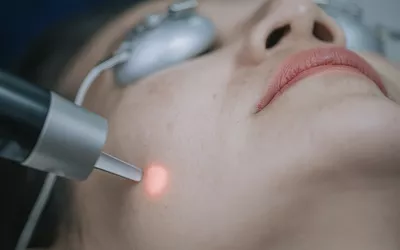
Dermatologists are now using retinoids as pre-procedure optimization tools. For instance, if you are planning a laser resurfacing treatment or a chemical peel in 2026, your clinician will likely suggest a 3-month "prep phase" using a stabilized retinoid. This primes the skin, ensuring that the cell turnover is already efficient, which leads to faster healing and more dramatic results from the professional procedure.
Using retinol on clear skin is an investment in your future self. By maintaining a high level of collagen synthesis and orderly cell maturation, you are essentially building a "reserve" of healthy skin that can better withstand the environmental stressors of the modern world.
Best Practices for Maximum Safety
While retinol is safe, it is a powerful biological tool that requires a specific set of rules to ensure you don't compromise your skin barrier.
1. The SPF Non-Negotiable Because retinol thins the stratum corneum (the outermost layer of dead skin cells) to reveal the fresh skin beneath, your face becomes significantly more susceptible to UV damage. Using retinol without daily SPF 50+ is counterproductive; you will end up with more sun damage than the retinol can fix.
2. Ingredient Conflict Management Avoid using "kitchen sink" skincare routines. If you are using retinol at night, do not use chemical exfoliants (AHAs or BHAs) in the same session. This can lead to over-exfoliation and a compromised moisture barrier. Instead, use your Vitamin C and acids in the morning (if tolerated) and keep your evening routine focused on Vitamin A and hydration.
3. When to Pause
- Pregnancy/Nursing: Conventional retinoids are generally advised against during pregnancy. Look for "Bakuchiol" as a plant-based, safe alternative.
- Waxing: Stop using retinol at least 5-7 days before any facial waxing to prevent "skin lifting."

FAQ
Q: Can I use retinol if I have no acne or wrinkles? A: Yes. Retinol works on a cellular level to maintain skin health. Think of it as "exercise" for your skin cells; you don't wait to be out of shape to start going to the gym. It helps maintain the clarity you already have while building collagen for the future.
Q: How do I know if the irritation I'm feeling is "normal" or a "reaction"? A: "Normal" retinization involves slight dryness, a mild stinging sensation when applying moisturizer, and fine flaking. A "reaction" or "damaged barrier" involves intense burning, swelling, oozing, or a rash. If you experience the latter, stop use immediately and consult a professional.
Q: Is it better to use retinol every night or every other night? A: Consistency is more important than frequency. Most people find that 3-4 times a week provides 90% of the benefits with 0% of the irritation. By 2026, "skin cycling"—alternating active nights with recovery nights—has become the gold-standard recommendation for maintaining clear skin without stress.
Ready to Future-Proof Your Skin?
The path to a lifetime of radiant skin isn't found in a "quick fix" but in the consistent application of proven science. Whether you are looking to refine your current "clear" complexion or you're preparing for the body-care innovations of 2026, there has never been a better time to integrate Vitamin A into your ritual.