Quick Facts
- The Paradox: While UVB rays can slow skin cell overgrowth, sunburn triggers the Koebner phenomenon, causing new psoriasis plaques to form at the site of skin damage.
- Vitamin D Balance: Wearing sunscreen does not typically lead to Vitamin D deficiency. Most patients maintain healthy levels through brief incidental exposure, diet, and supplementation.
- SPF Recommendation: Dermatologists advise using a broad-spectrum, mineral-based SPF 30+.
- Reapplication Rule: Psoriasis patients should reapply sunscreen every 45 to 60 minutes to maintain a protective barrier and prevent UV-induced trauma.
- Statistics: Clinical consensus suggests that while up to 80% of psoriasis patients see improvement with sun exposure, the risk of flares increases significantly without a broad-spectrum SPF 30+ barrier.
The Psoriasis Paradox: Navigating the Sun as Friend and Foe
If you live with psoriasis, your relationship with the sun is likely complicated. On one hand, you’ve probably heard—or experienced—that a little bit of sunshine can work wonders for clearing up stubborn plaques. On the other hand, a single afternoon of overexposure can lead to a painful flare that takes weeks to settle. This is what we call the "Psoriasis Paradox."
As a preventive care editor, I often see patients struggle with this duality. We want the anti-inflammatory benefits of Vitamin D and UV light, but we must avoid the cellular trauma that triggers our immune system into overdrive. Managing this balance isn't just about "putting on some lotion"; it's about a strategic, evidence-based approach to sun safety that respects the unique sensitivity of psoriatic skin.

The Science of Sunlight: UVB Benefits vs. The Koebner Phenomenon
To understand why the sun affects psoriasis the way it does, we have to look at the different types of UV radiation. UVB rays are the primary "healing" rays; they penetrate the epidermis and slow down the rapid turnover of skin cells that characterizes psoriasis. This is essentially what happens during medical phototherapy, albeit in a controlled environment.
However, the sun also emits UVA rays, which penetrate deeper and contribute to aging and skin cancer. When your skin receives too much of either, it sustains damage. For those with psoriasis, this damage is particularly risky because of the Koebner phenomenon.
Does sunburn trigger psoriasis? Yes. The Koebner phenomenon occurs when a person with a pre-existing skin condition develops new lesions at the site of an injury. A sunburn is a form of skin injury. Even if your plaques are currently clear, a significant burn can cause a fresh "flare" of plaques to erupt exactly where the skin was red and peeling.
Statistical data shows a stark contrast: while roughly 80% of psoriasis patients report that moderate sun exposure improves their symptoms, the risk of a severe flare-up increases exponentially the moment skin becomes irritated or burned. This is why a broad-spectrum SPF 30+ barrier is non-negotiable.

The Vitamin D Dilemma: Finding the Middle Ground
A common concern I hear is: "If I wear sunscreen all the time, won't I become Vitamin D deficient? And doesn't low Vitamin D make psoriasis worse?" It’s a valid question. Vitamin D is a hormone-like vitamin that plays a crucial role in immune regulation.
Does sunscreen cause Vitamin D deficiency in psoriasis patients? In theory, sunscreen reduces the skin's ability to produce Vitamin D. However, real-world studies show that normal sunscreen application typically does not result in deficiency. Most people do not apply sunscreen perfectly or cover every inch of skin, allowing for enough UV absorption to synthesize Vitamin D. Furthermore, the risk of skin cancer and the Koebner phenomenon far outweighs the benefits of unprotected "sun-soaking."
To maintain your Vitamin D levels without risking a flare, I recommend a holistic three-pillar approach:
- Incidental Exposure: Just 10 to 15 minutes of sun on your arms or legs a few times a week is often sufficient for Vitamin D synthesis for many skin types.
- Dietary Intake: Prioritize Vitamin D-rich foods. Fatty fish like salmon, mackerel, and sardines are excellent sources that also provide Omega-3 fatty acids, which help reduce systemic inflammation.
- Smart Supplementation: Especially during winter or if you are strictly sun-avoidant, an oral Vitamin D3 supplement can bridge the gap safely.


Choosing the Best SPF for Psoriasis Skin
When shopping for sunscreen for psoriasis, the ingredient list is your most important tool. Psoriatic skin has a compromised barrier, meaning it is more susceptible to irritation from fragrance, alcohol, and harsh chemicals.
What is the recommended SPF for psoriasis? Dermatologists recommend a broad-spectrum, mineral-based sunscreen with an SPF of at least 30. "Broad-spectrum" ensures you are protected from both UVA (aging) and UVB (burning) rays.
Mineral vs. Chemical Sunscreens
I almost always recommend mineral blockers (also known as physical blockers) for my readers with sensitive skin.
| Feature | Mineral Sunscreen | Chemical Sunscreen |
|---|---|---|
| Active Ingredients | Zinc Oxide, Titanium Dioxide | Avobenzone, Oxybenzone, Octisalate |
| How it Works | Sits on top of skin; reflects UV rays | Absorbed into skin; converts UV to heat |
| Irritation Risk | Very Low (Ideal for Psoriasis) | Higher (Can cause stinging/itching) |
| Application | Effective immediately | Needs 20 minutes to "set" |
| Texture | Can be thicker or leave a white cast | Often thinner and more "invisible" |
Ingredients to Look For:
- Ceramides: Help repair the skin barrier.
- Hyaluronic Acid: Provides essential hydration.
- Niacinamide: Calms redness and inflammation.
Ingredients to Avoid:
- Alcohol: Extremely drying for plaques.
- Fragrances and Dyes: Common triggers for contact dermatitis.
- Oxybenzone: A chemical filter that can be irritating and is often not reef-safe.
The Golden Rule: Application and Reapplication
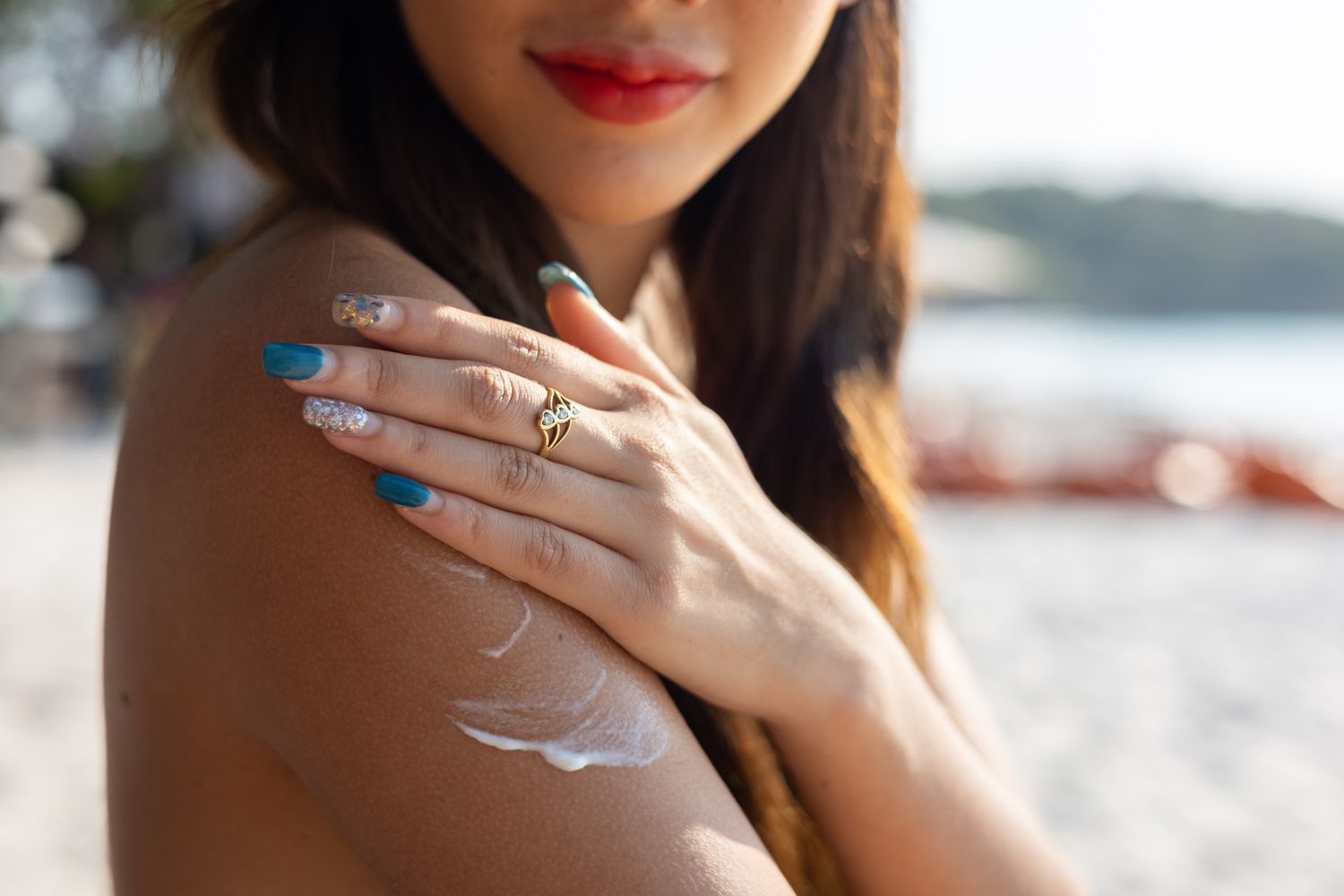
Most people use only a fraction of the sunscreen they actually need. For a full-body application, you should aim for about one ounce—roughly the size of a shot glass. For your face, a full teaspoon is the standard.
However, for those with psoriasis, the frequency of reapplication is the true game-changer.
How often should I reapply? While the general public is told every two hours, dermatologists advise a strict reapplication cycle of every 45 to 60 minutes for psoriasis patients. This frequent schedule accounts for sweat, water exposure, and the heightened need to prevent even the slightest UV-induced skin trauma.
Psoriasis Travel Skin Care: Your Vacation Survival Kit
Traveling can be stressful, and stress is one of the most common triggers for psoriasis flares. Combined with changes in climate and water quality, your skin needs extra TLC during a trip.
? The Psoriasis Traveler’s Checklist
- [ ] Mineral Sunscreen (SPF 30+): Pack more than you think you need.
- [ ] Fragrance-Free Ointment: A thick, occlusive moisturizer to lock in hydration after swimming.
- [ ] Magnesium Oil: Great for soothing the "itch" after a long day in the sun.
- [ ] Vitamin D Cream: A topical way to support skin health (consult your doctor first).
- [ ] UPF Clothing: A wide-brimmed hat and a UPF 50+ rash guard provide constant protection without the need for constant reapplication.
- [ ] Mindfulness App: Use a tool like Calm or Headspace for 10 minutes a day to keep travel-induced cortisol levels in check.
When you're out and about, remember that shade is your best friend. A wide-brimmed hat isn't just a fashion statement; it's a physical barrier that protects the scalp and forehead, areas where psoriasis often hides.
Navigating Summer Elements: Pools, Sweat, and Saltwater
Sun isn't the only summer element that impacts psoriasis.
Chlorinated Pools Chlorine can be incredibly drying. To protect your skin, rinse off in fresh water before entering the pool to "saturate" your skin cells, then apply a thin layer of an emollient moisturizer to act as a barrier. Always shower immediately after exiting the pool.
Saltwater Interestingly, many people find that the minerals in saltwater (like the Dead Sea) actually help de-scale plaques and reduce inflammation. However, salt can also sting open cracks in the skin. Always rinse with fresh water and moisturize after a dip in the ocean.
Managing Sweat Sweat can lead to inverse psoriasis—red, smooth flares in skin folds (like the armpits or behind the knees). If you’re active, wear moisture-wicking fabrics and use a gentle, talc-free powder or a barrier cream to prevent friction and moisture buildup.
Understanding Your Sensitivity: The Fitzpatrick Scale
Your risk of sun damage depends heavily on your skin type. Use this chart to gauge how much protection you need:
| Type | Description | Sun Reaction |
|---|---|---|
| I | Very pale skin, blue/green eyes, freckles | Always burns, never tans |
| II | Fair skin, light eyes | Burns easily, tans minimally |
| III | Fair to medium skin | Sometimes burns, gradually tans |
| IV | Olive skin, dark hair | Rarely burns, tans easily |
| V | Brown skin | Very rarely burns, tans very easily |
| VI | Dark brown to black skin | Almost never burns |
Note: Even if you are Type VI, you still need sunscreen to prevent UV-induced skin damage and potential Koebner flares!
FAQ
Q: Can I use a spray sunscreen for psoriasis? A: Generally, no. Many spray sunscreens contain high levels of alcohol to help them dry quickly, which can sting and dry out psoriatic plaques. If you must use a spray, opt for a mineral-based one and rub it in thoroughly to ensure even coverage.
Q: Should I apply sunscreen over my prescription topical steroids? A: Yes, but timing matters. Apply your medicated ointment first and wait about 20–30 minutes for it to fully absorb into the skin before applying your sunscreen. Applying them together can dilute the medication and reduce the SPF's effectiveness.
Q: Is "reef-safe" sunscreen better for psoriasis? A: Reef-safe usually means the formula is free of oxybenzone and octinoxate. Since these chemical filters are also common skin irritants, reef-safe mineral sunscreens are often the safest and gentlest choice for those with psoriasis.
Conclusion
Managing psoriasis doesn't mean you have to hide in the shadows all summer. By understanding the science of the Koebner phenomenon and respecting the power of UVB, you can find a healthy balance. Focus on high-quality mineral sunscreens, stick to a rigorous reapplication schedule, and supplement your Vitamin D through diet and oral care rather than unprotected sun exposure.
Your skin is your body's first line of defense; treat it with the care and protection it deserves so you can enjoy the warmth of the season flare-free.